For Such a Time as This
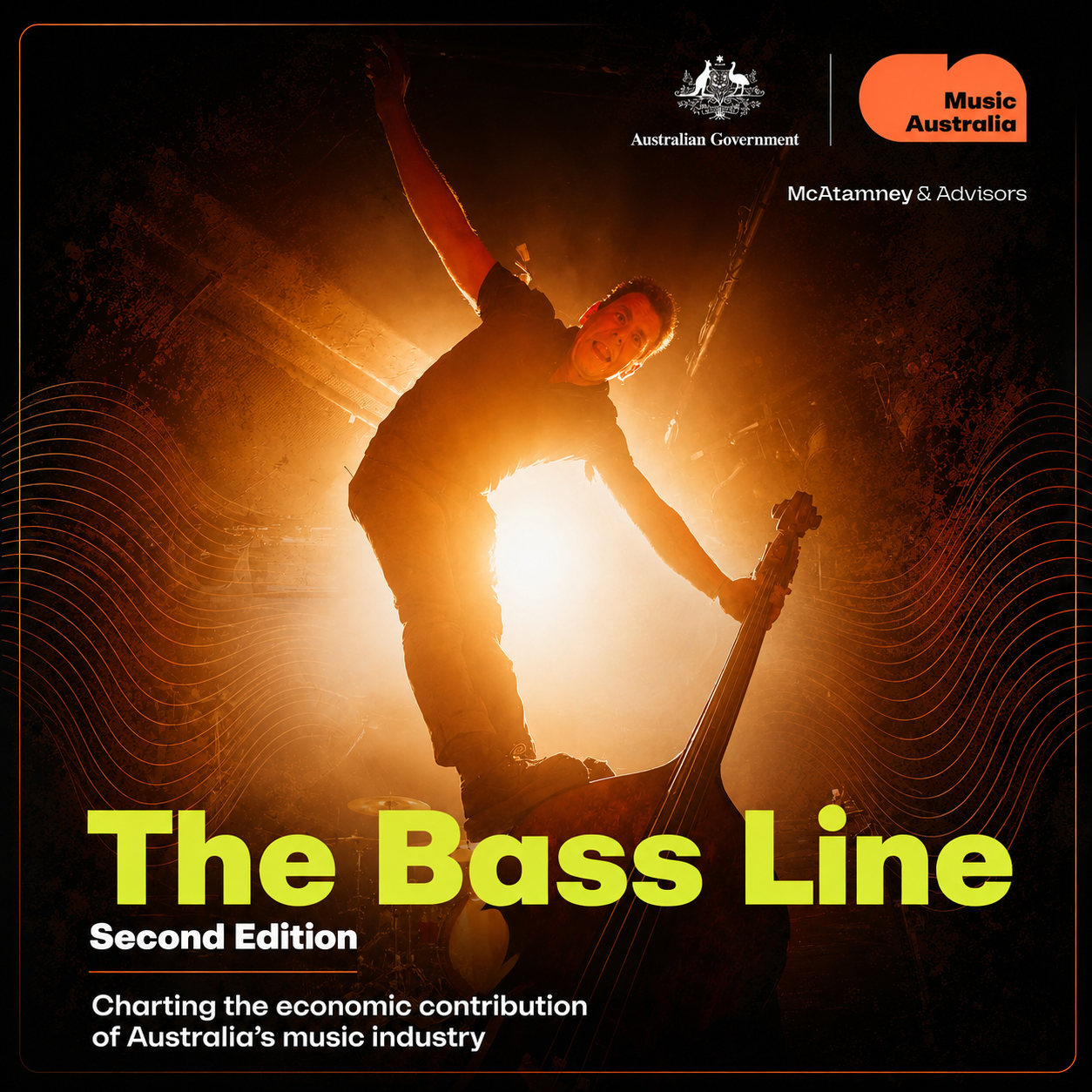
Something significant happened in the Australian music sector last month, and I don't think it's fully landed yet. Music Australia released the second edition of The Bass Line report — the most comprehensive economic analysis of the Australian music industry ever produced. For the first time, music education was quantified as a subsector in its own right.
The finding: music education is the single largest economic contributor in a $10.76 billion industry. Larger than live performance. Larger than recorded music. The foundation everything else sits on.
This wasn't a surprise to those of us who have spent careers at the intersection of music and education. But having the hard evidence — finally — changes the conversation. It moves the argument from values to economics. And that shift matters enormously for what happens next.
The foundation has been laid — and it matters.
Significant philanthropic and advocacy energy has found its home in primary school music education - and rightly so. This work has been essential. Not just because young children deserve access to music, but because the evidence is clear: the quality of music education in primary school determines whether a student arrives at secondary school with any relationship to music at all.
Without that foundation, everything that follows gets harder. The advocacy, the research, the curriculum reform — it has created real momentum and real policy attention at a moment when both were desperately needed.
But here's the question that doesn't get asked often enough: what happens next?
The hardest years are the ones nobody talks about.
When students hit secondary school, music becomes compulsory — formally, structurally, with mandated timetabled hours. In theory, this is the moment every primary school music advocate has been working toward. In practice, it's where things get complicated.
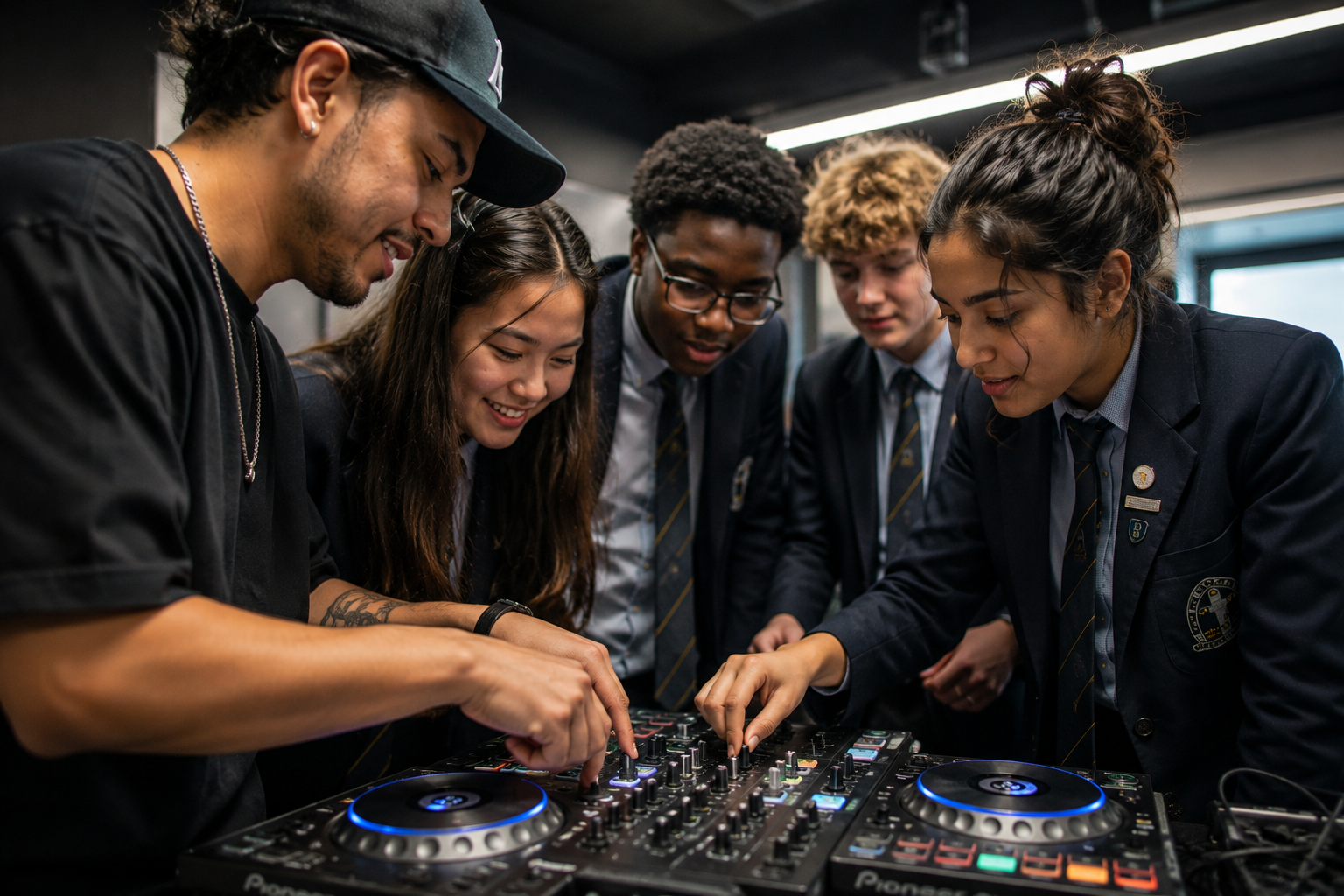
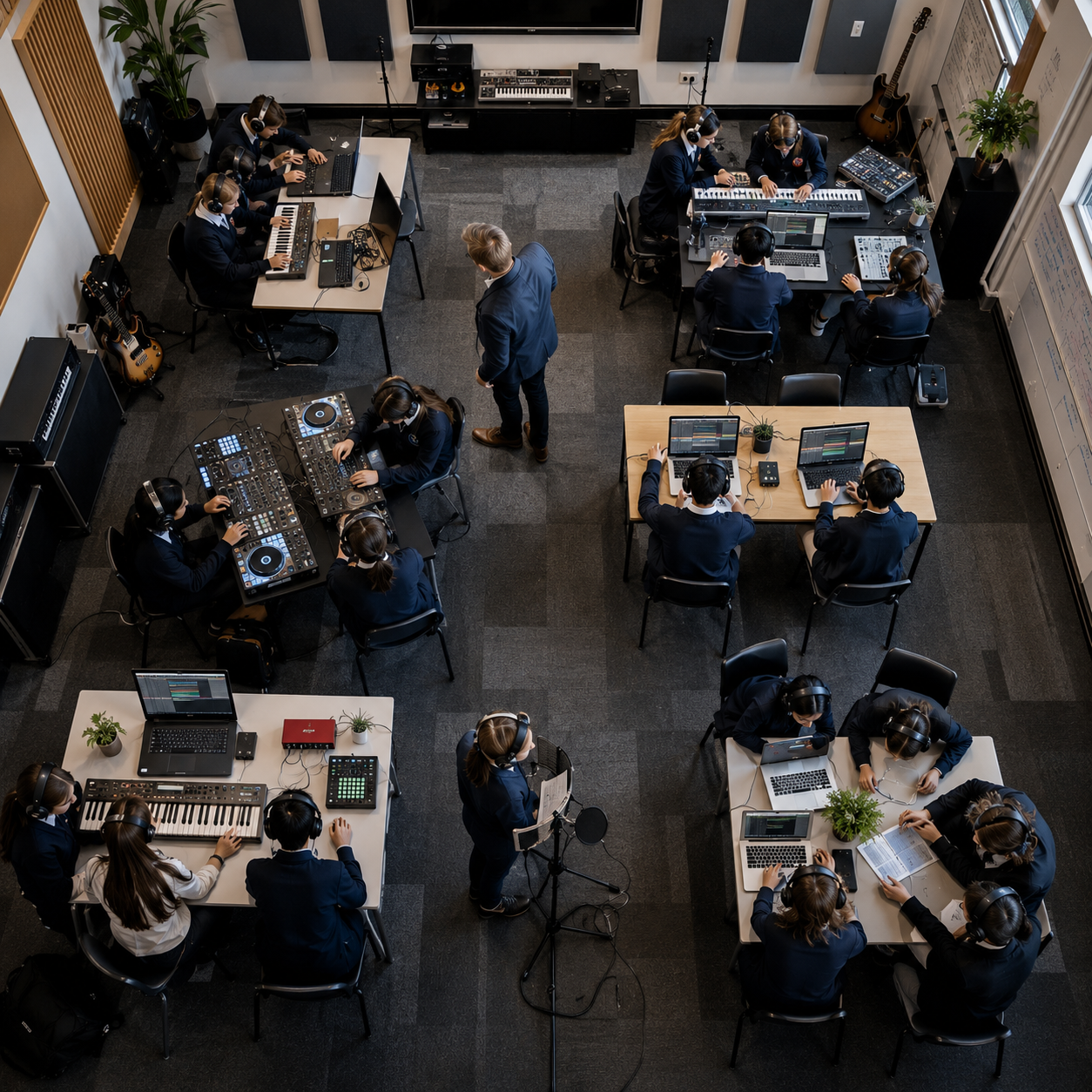
The compulsory music classroom in Years 7 and 8 is one of the most challenging teaching environments in Australian schools. A student who has played a musical instrument since they were four sits next to a student who has had little or no music education through primary school. The differentiation is enormous (greater than any other subject). The class sizes are large. And the pressure on music departments — running concerts, productions, ensembles, rehearsals, and co-curricular programs on top of their teaching load — leaves little room to redesign what happens in those compulsory hours.
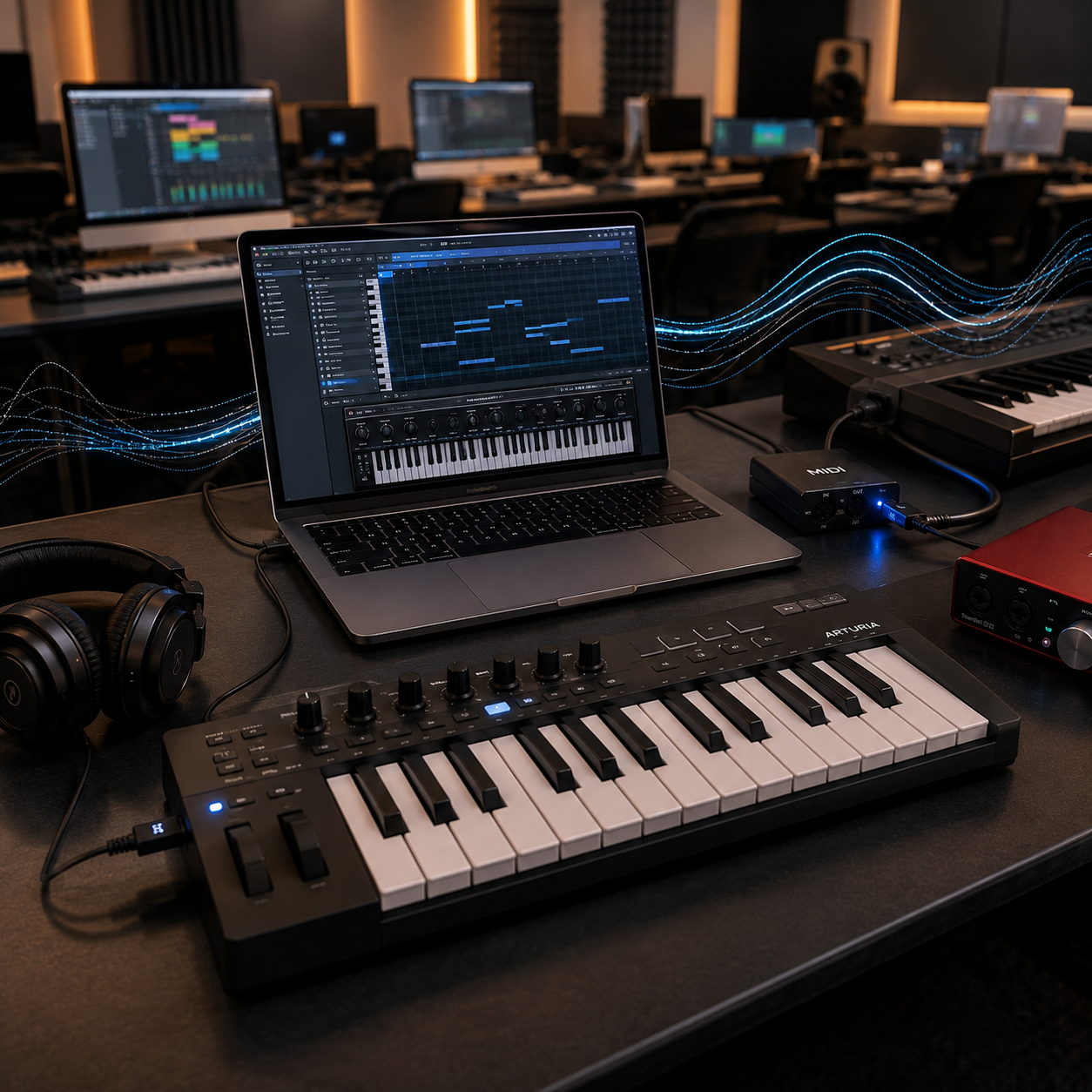
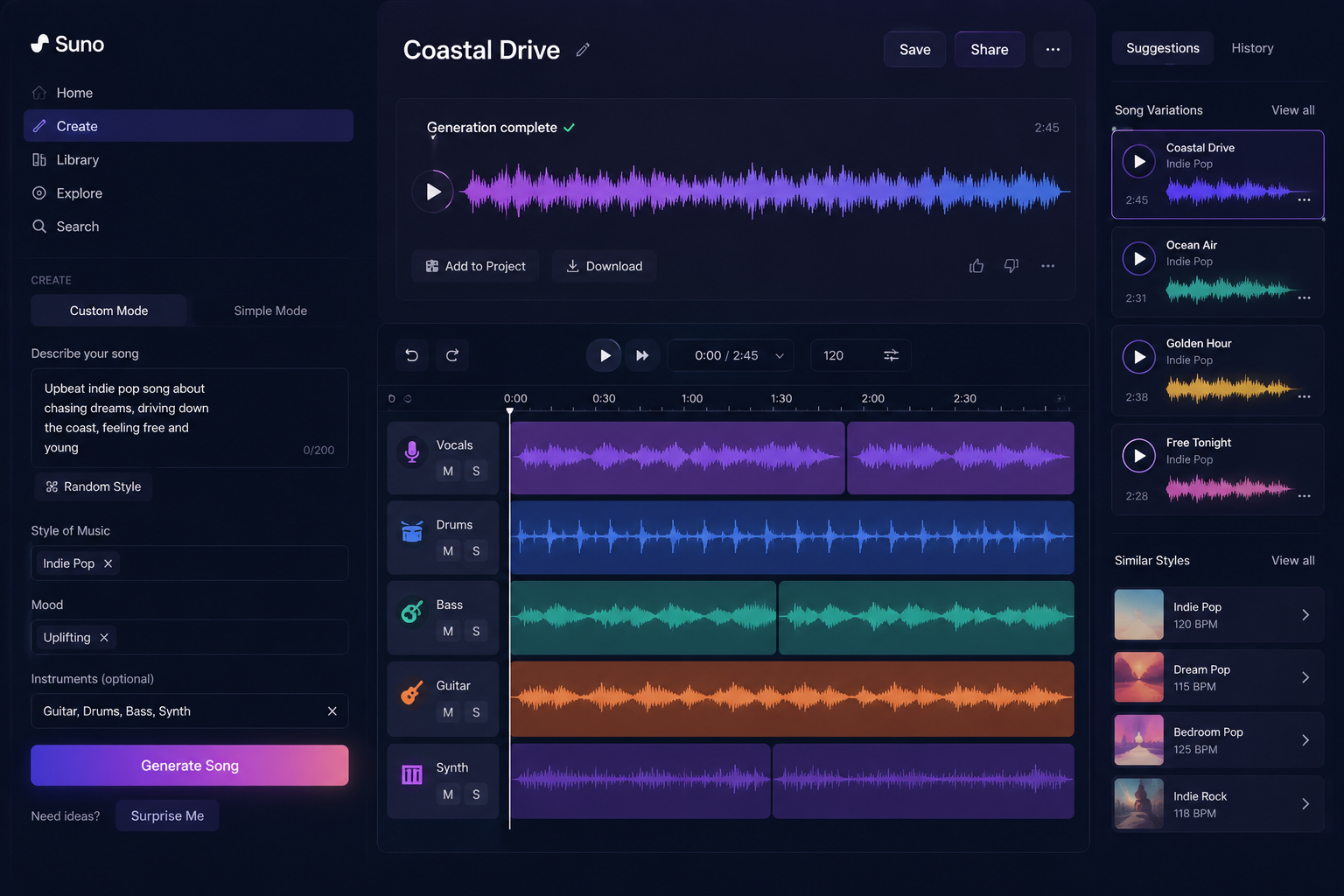
The result is predictable. What students experience in those years often doesn't connect with their musical identity. The student who produces beats on their phone at home, sits through a classroom lesson that feels like a different world entirely.
They disengage. They don't choose elective music. And the pipeline narrows.
Then the system actively pushes them out.
For the students who do choose music into senior years, the structure designed to credential their achievement works against them.
Music is one of the most cognitively demanding subjects available at senior secondary level. It requires the same analytical rigour as advanced mathematics — pitch, rhythm, harmony, and form are all deeply mathematical — combined with the expressive complexity of language, the cultural literacy of history, and the creative discipline of original composition and performance. There is no subject in the curriculum that asks more of a student across more dimensions simultaneously.
And yet some Australian curriculum authorities scale music down.
A student achieving at the highest level in music may have that result reduced in the final ATAR calculation, while lower raw scores in mathematics or science are scaled upward. School coordinators — doing their job — counsel students to drop music to protect their rankings. The Bass Line report documents this explicitly: ATAR scaling is identified as a primary driver of secondary music attrition nationally.
The consequence is perverse. The subject that most comprehensively develops creativity, analytical thinking, collaboration, cultural understanding, and performance under pressure — skills the World Economic Forum identifies as the most valued workforce capabilities for the decade ahead — is the one the system tells students to abandon.
It is difficult to understand the logic. It is harder still to defend it.
Every solution so far has been designed for teachers.
Look at the programs, the grants, the resources, the professional development — almost everything in the music education intervention space is designed to upskill, support, or resource teachers. That makes sense. Teachers are the delivery mechanism. If you don't solve for the teacher, nothing reaches the student.
But teachers in performing arts departments carry enormous workloads. The desire and goodwill is there. The capacity to absorb more change, more training, more new frameworks is finite.
And so we arrive at the question that economic analysis alone can never answer: what about the students?
Not the students as the eventual outcome of a policy intervention that takes years to filter through. The students right now — in classrooms this term and next, making the decision about whether music is for them — have almost no say in what that experience looks like.
The measure of success in music education has largely been: did we reach the teacher? Did the teacher change their practice? Did the school adopt the program?
Rarely do we ask: did the student find themselves in it? Did the music feel like theirs?
This is the moment.
NSW has updated its Music 7–10 Syllabus for the first time in a generation — bringing composition and contemporary music-making from the margins to the mainstream. The economic evidence has been made. The policy conversation is shifting.
The question is whether what gets built in response to this, is designed around what teachers can manage — or around what students actually need.
Those are not always the same thing. And in the gap between them is where we've been losing a generation of music students, one compulsory classroom at a time.
The sector has never been better positioned to do something about it. The foundation has been laid. The evidence is there. The argument has been won.
What we build next is the thing that matters.
The full report from Music Australia can be found here: The Bass Line - Charting the economic contribution of The Australian Music Industry.
Kate Hargreaves is the founder of MusicEDU Suite, an Australia-based music education platform helping secondary school teachers around the world deliver engaging, contemporary music education.
Like what you read?
You should see our curriculum.
It takes less than a minute to sign up for a Free Trial of The MusicEDU Suite. Your students will thank you for it.