What is the difference between STEM and STEAM?
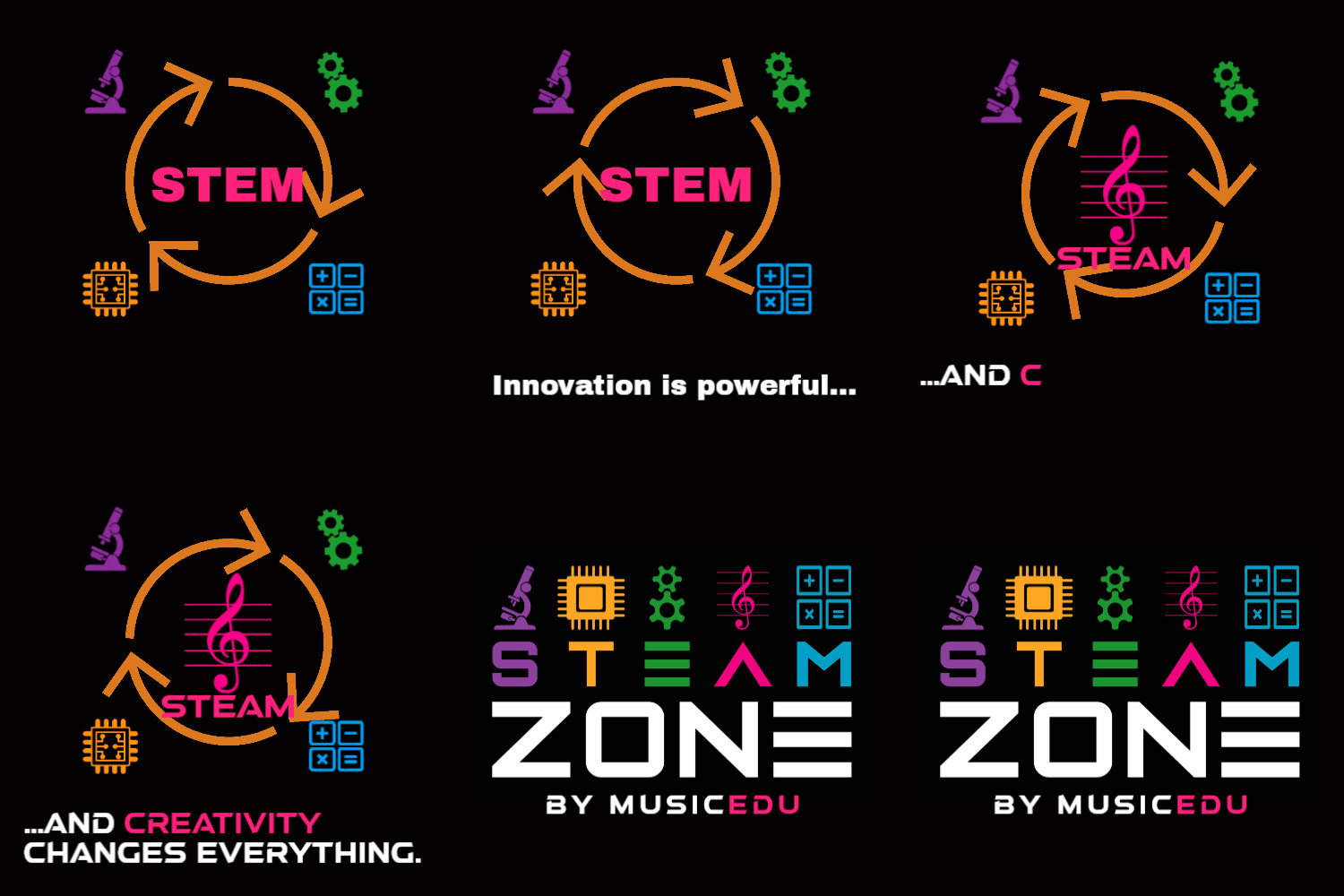
If you've been in a staffroom conversation about curriculum direction in the past few years, you've almost certainly heard both terms. STEM — Science, Technology, Engineering, and Mathematics — has been a fixture of education policy for decades. STEAM adds the A for Arts, and with it, a fundamentally different argument about what students need to thrive in a complex world. Understanding the distinction isn't just useful for curriculum planning. It's increasingly important for making the case to school leadership about why music belongs at the centre of a modern education, not the edges.
What is STEM?
STEM education emerged in the late 1990s and early 2000s as a response to growing concern about workforce readiness in technical fields. The focus is on building skills in science, technology, engineering, and mathematics through integrated, often project-based learning. STEM approaches tend to emphasise logical reasoning, systematic problem-solving, and measurable outcomes — competencies that map directly to careers in fields like engineering, computing, and life sciences.
There's no question STEM works. Schools with strong STEM programs consistently produce students who are better equipped for technical careers and higher education in related fields. But critics — and there are many — argue that STEM as originally conceived misses something critical: the creative and human dimension of problem-solving.
What does the A in STEAM add?
The Arts were introduced to STEM by Rhode Island School of Design (RISD) in the early 2010s, initially through advocacy by the then-president, John Maeda. The argument was straightforward: the most innovative companies in the world — Apple, Pixar, IDEO — weren't succeeding because their engineers were more technically skilled. They were succeeding because their teams could think creatively, communicate visually, and make things that felt right to use, not just technically correct.
Adding the A isn't about diluting STEM subjects or giving music a seat at the table out of sentimentality. It's about recognising that creative disciplines train a fundamentally different type of thinking — one that complements analytical reasoning rather than competing with it. Design thinking, aesthetic judgement, collaboration through creative practice, the ability to iterate toward something that doesn't yet exist: these are Arts skills, and they're exactly what the STEM fields increasingly say they need.
Where music fits in the STEAM framework
Music is arguably the most STEAM-native of all the Arts disciplines. Consider what a student is actually doing when they learn to produce a beat, compose a game soundtrack, or perform as part of an ensemble:
- They're applying mathematics — rhythm, time signatures, frequency relationships, waveform manipulation.
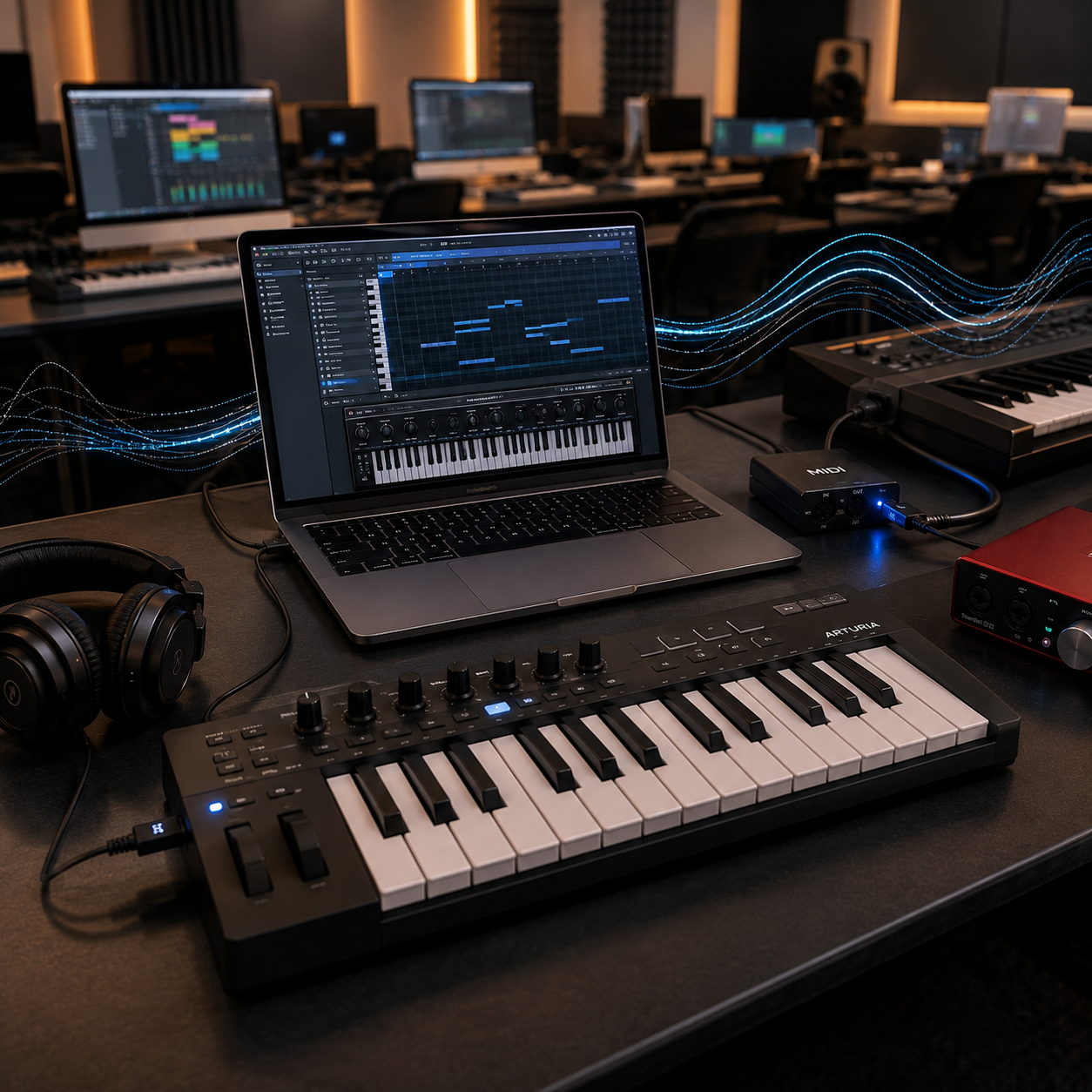
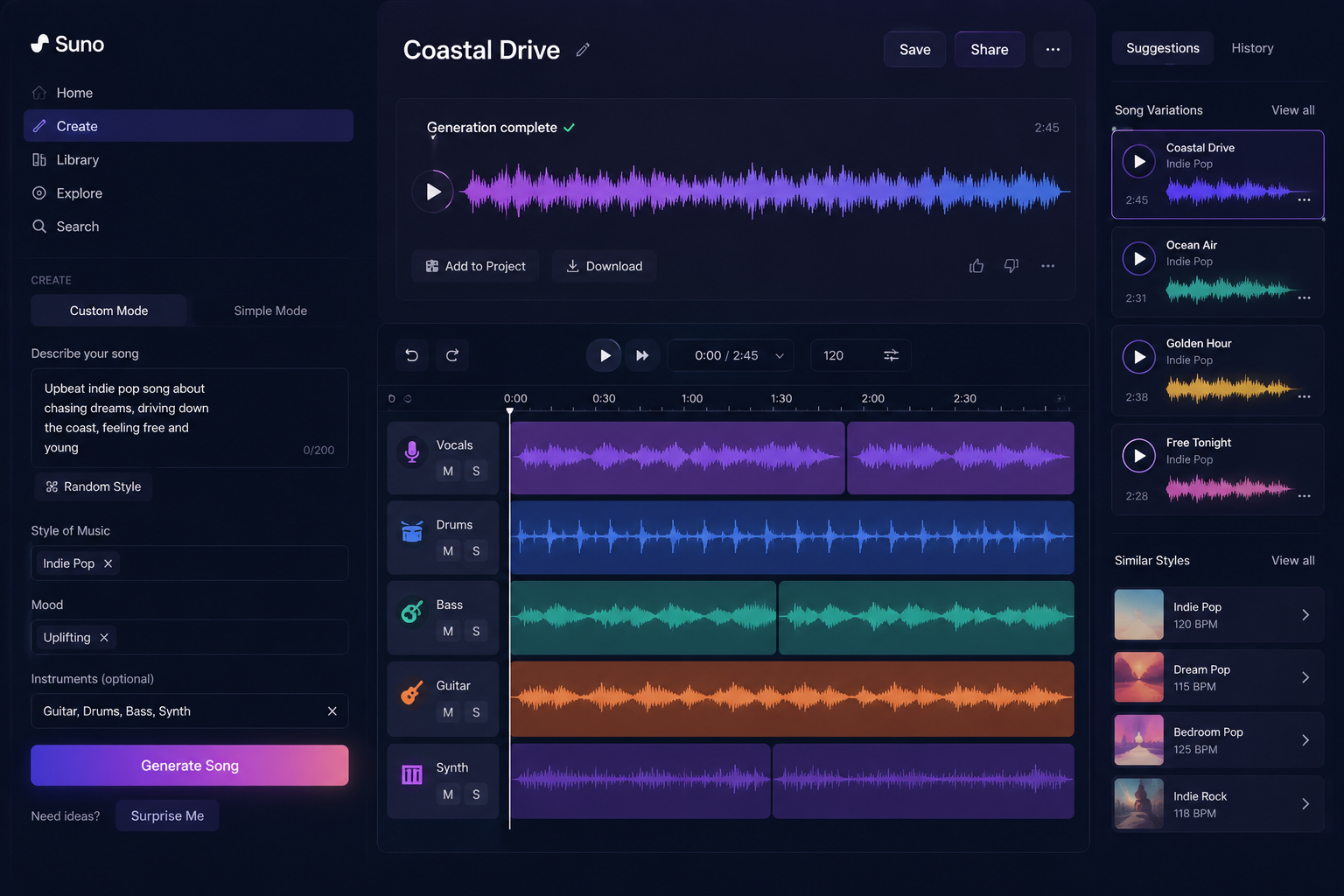
- They're engaging with technology — DAWs, MIDI controllers, audio interfaces, software synthesis.
- They're solving engineering-style problems — signal flow, latency, mixing and acoustic challenges.
- And they're doing all of this through a creative process that demands aesthetic judgement, emotional intelligence, and sustained creative effort.
This isn't a forced argument. It's what music education has always involved — STEAM just gives us a framework to make that visible to the rest of the school.
The practical difference for music teachers
Understanding the STEM/STEAM distinction matters practically when you're writing curriculum proposals, applying for school funding, or making the case to a principal who's under pressure to demonstrate STEM outcomes. STEAM gives music a legitimate seat in those conversations — but only if music programs are designed to make the connections explicit.
That means units shouldn't just develop musical skills in isolation. A unit on electronic music production should explicitly name the physics of sound, the technology stack involved, and the mathematical relationships in music theory. A songwriting unit should surface the iterative creative process — hypothesis, draft, test, refine — in ways that mirror scientific method. This isn't changing what you teach. It's changing how you frame it.
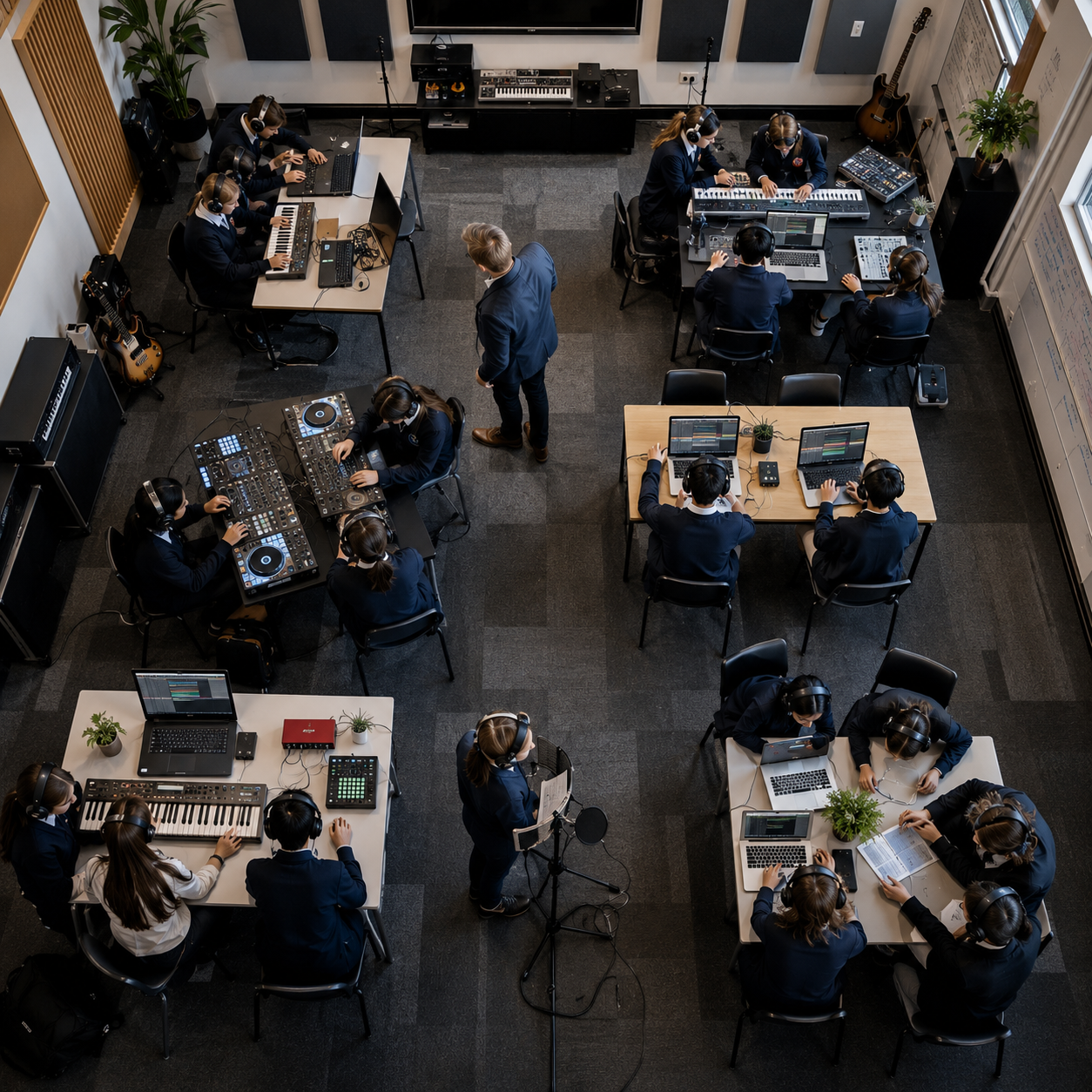
Programs like MusicEDU's SteamZONE (formerly AR Classroom) and Game Composer are built with this framing in mind — students are composing, producing, and performing while working directly with the kinds of technology and systematic processes that define STEAM learning. The curriculum connections are explicit, which makes it straightforward to demonstrate cross-curriculum alignment.
Why this matters now
The Australian Curriculum v9.0 has reinforced the importance of General Capabilities — critical and creative thinking, digital literacy, personal and social capability — across all learning areas. These aren't add-ons. They're the connective tissue of a curriculum designed to prepare students for a world that's genuinely unpredictable. STEAM thinking, done well, addresses all of them simultaneously.
For music teachers, this is an opportunity, not just a framework. The argument that music is 'just an elective' becomes much harder to sustain when you can demonstrate that your students are developing technical skills, creative problem-solving, digital fluency, and collaborative practice — all through a single subject. STEM versus STEAM isn't really an argument about acronyms. It's an argument about what a complete education looks like. And music has always been part of the answer.
Like what you read?
You should see our curriculum.
It takes less than a minute to sign up for a Free Trial of The MusicEDU Suite. Your students will thank you for it.